Does Restaurant Insurance Cover Delivery Drivers and Third-Party Apps?
Delivery has become a core part of running a restaurant. But a lot of owners assume their existing policy handles every delivery scenario, and that assumption can get expensive fast. Food delivery insurance isn’t always built into a standard restaurant coverage policy, which means an accident or spoiled order could end with serious consequences.
Online food delivery reached nearly $1.4 trillion in revenue worldwide in 2025, according to Statista. With that kind of growth, more restaurants are putting drivers on the road than ever before. Let’s break down what your coverage actually protects, and where the holes tend to show up.
Why Delivery Creates Extra Risk for Restaurants
The moment your food leaves the kitchen, your exposure grows. Delivery introduces risks you simply don’t face when customers dine in, including:
- Driver accidents on the road
- Injuries to other drivers, pedestrians, or cyclists
- Property damage caused during a delivery
- Food spills or contamination in transit
- Customer complaints over late, damaged, or incorrect orders
- Liability confusion between the restaurant, the driver, and the delivery app
General liability insurance doesn’t cover delivery accidents, so if something goes wrong during a food delivery, how can you make sure your business is protected?
Who Is Actually Making the Delivery?
This is the question that shapes your entire coverage picture. Your food delivery insurance needs change based on who’s behind the wheel:
- A restaurant employee using a company-owned vehicle
- A restaurant employee using their personal car
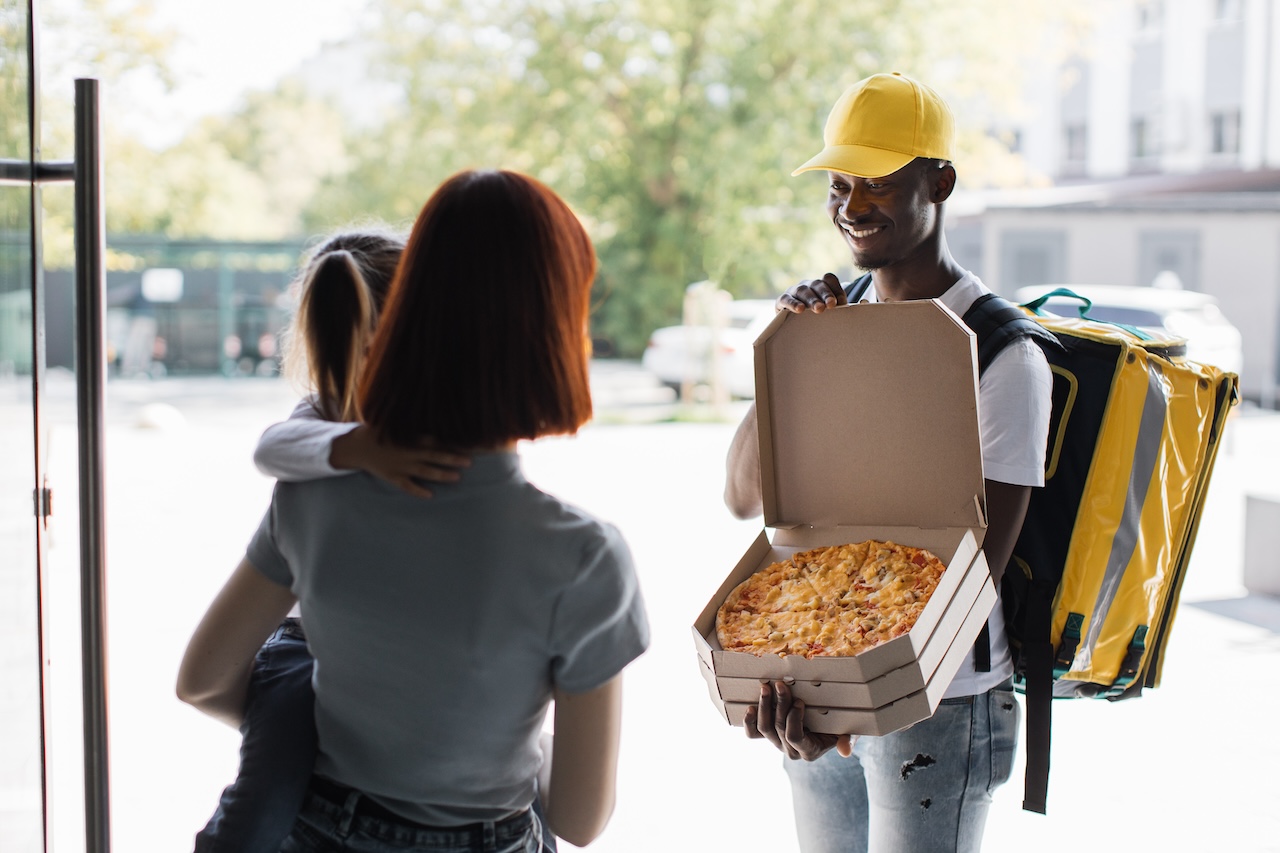
- A third-party app driver through DoorDash, Uber Eats, Grubhub, etc.
Each scenario triggers different rules, so let’s look at them one at a time.
If Your Restaurant Owns the Delivery Vehicle
When your business owns the car or van used for deliveries, you’ll likely need commercial auto insurance. Personal auto policies typically exclude vehicles used for business, so a company-owned delivery car wouldn’t be covered under one.
Commercial auto coverage can pay for bodily injury, property damage, and legal costs tied to an accident involving your delivery vehicle. It’s the foundation of food delivery insurance for any restaurant running its own fleet.
If Employees Use Their Own Cars for Delivery
Here’s a common trap. Many owners assume an employee’s personal auto policy will handle any accident during a delivery run. That’s risky. Most personal policies don’t cover crashes that happen while driving for work, which could leave your restaurant exposed to a lawsuit.
This is where hired and non-owned auto (HNOA) insurance comes in. This coverage protects your business when employees drive personal or rented vehicles for work. If a delivery driver causes an accident in their own car, HNOA can cover claims against your restaurant. It doesn’t repair the employee’s vehicle, but it shields your business from liability.
What About Third-Party Delivery Apps?
Apps like DoorDash and Uber Eats carry their own food delivery insurance for their drivers, but that protection has limits and may not extend to your restaurant. Coverage often depends on whether the driver was actively making a delivery and the specific terms in your contract with the app. Don’t assume app insurance covers every claim that could come your way.
Food Safety, Spoilage, and Delivery Claims
Not every delivery problem happens on the road. Food can spoil, leak, or get contaminated before it reaches the customer. Depending on the situation, these claims may fall under your general liability, product liability, food contamination coverage, spoilage coverage, or business income coverage. Knowing which policy applies before a claim happens saves a lot of stress.
Are Delivery Drivers Covered by Workers’ Comp?
It depends on the driver’s status. Workers’ compensation generally applies to your employees, not independent contractors or app drivers. So if your own employee gets hurt during a delivery, workers’ comp may cover their medical bills and lost wages. An app driver injured on the job usually falls outside your policy.
Common Coverage Gaps to Watch For
These are the mistakes that tend to catch restaurant owners off guard:
- Assuming a Business Owner’s Policy (BOP) covers all delivery risks
- Letting employees deliver in personal vehicles without verifying coverage
- Skipping hired and non-owned auto coverage
- Believing general liability covers auto accidents
- Trusting that app insurance protects the restaurant from every claim
- Not reviewing third-party delivery contracts carefully
- Forgetting to tell your insurer when delivery becomes a regular service
- Overlooking catering, alcohol delivery, or late-night delivery risks
- Not checking whether workers’ comp applies to delivery employees
- Failing to document food handling procedures for delivery orders
FAQ
Does restaurant insurance cover delivery drivers?
Not automatically. Coverage depends on who’s driving and what vehicle they use. Employees in company vehicles need commercial auto, while those in personal cars usually require hired and non-owned auto coverage.
Does general liability cover food delivery accidents?
No. General liability covers injuries and property damage at your premises or from your products, such as a customer slipping in your dining room or a foodborne illness claim. It isn’t the same as food delivery insurance. You need commercial auto or hired and non-owned auto insurance for delivery crashes.
Does restaurant insurance cover food that spoils during delivery?
It might, depending on your policy. Spoilage, food contamination, product liability, or business income coverage may apply. A standard policy doesn’t always include these, so it’s worth confirming with your agent.
Does workers’ compensation cover restaurant delivery drivers?
Usually only if the driver is your employee. Independent contractors and third-party app drivers typically fall outside your workers’ comp policy, leaving their injuries uncovered by your business.
Let’s Find the Right Coverage Together
Delivery risks shouldn’t keep you up at night. The team at Bethany Insurance can review your current policy, spot the gaps, and build a food delivery insurance profile that fits how your restaurant actually operates. Give us a call at Bethany Insurance, and let’s talk through your options.